Precision, emotion and inventive wit
Jon Klassen is a Canadian illustrator and picture book artist. His breakout book "I Want My Hat Back" (2011) is a layered, ingeniously told tale of ownership and morality. Klassen's body of work forms a subtle, astute, and humorous investigation into existential questions, where feelings of anticipation, suspense, and shock play a central role.
 Photo: Maja Brand
Quick facts
The jury’s citation
Through his subtle and evocative storytelling in words and pictures, Jon Klassen opens new perspectives on our place in the universe. What happens when a rock falls from the sky, when hats disappear or a skull begins living a life of its own? With precision, emotion and inventive wit, life’s challenges of uncertainty and hopefulness are portrayed in an interplay of colour and form. Jon Klassen’s brilliant tales stand out for their effortless elegance and ambiguous depth, where the reader becomes a co-creator.
I Want My Hat Back
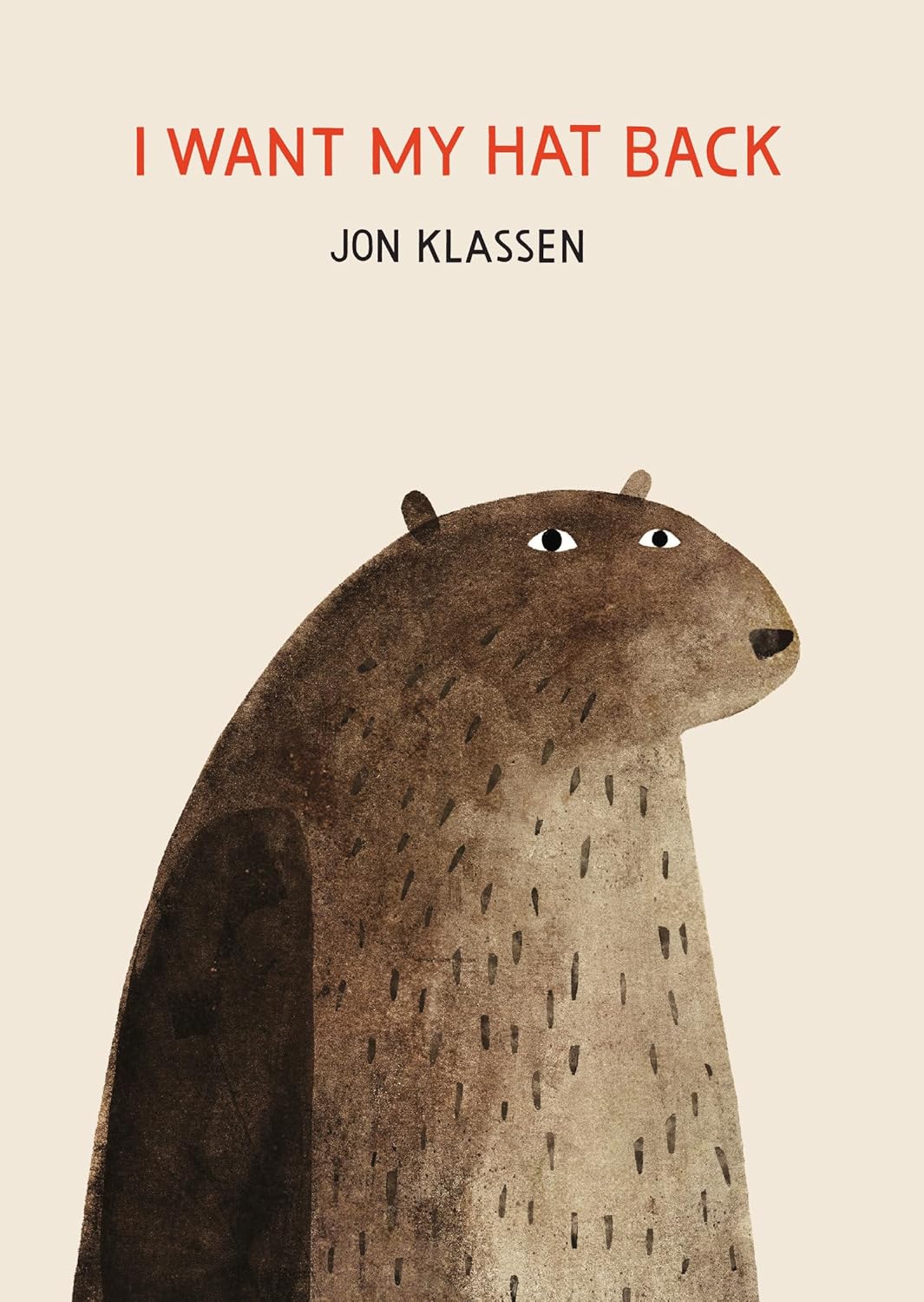
The book features bear whose hat has gone missing. Although the small, pointy hat doesn’t fit the bear very well, the bear loves it and asks all the other animals if they have seen it. They all say no, even the rabbit, who is clearly the thief. The first book in Jon Klassen's so-called Hat Trilogy.
This Is Not My Hat
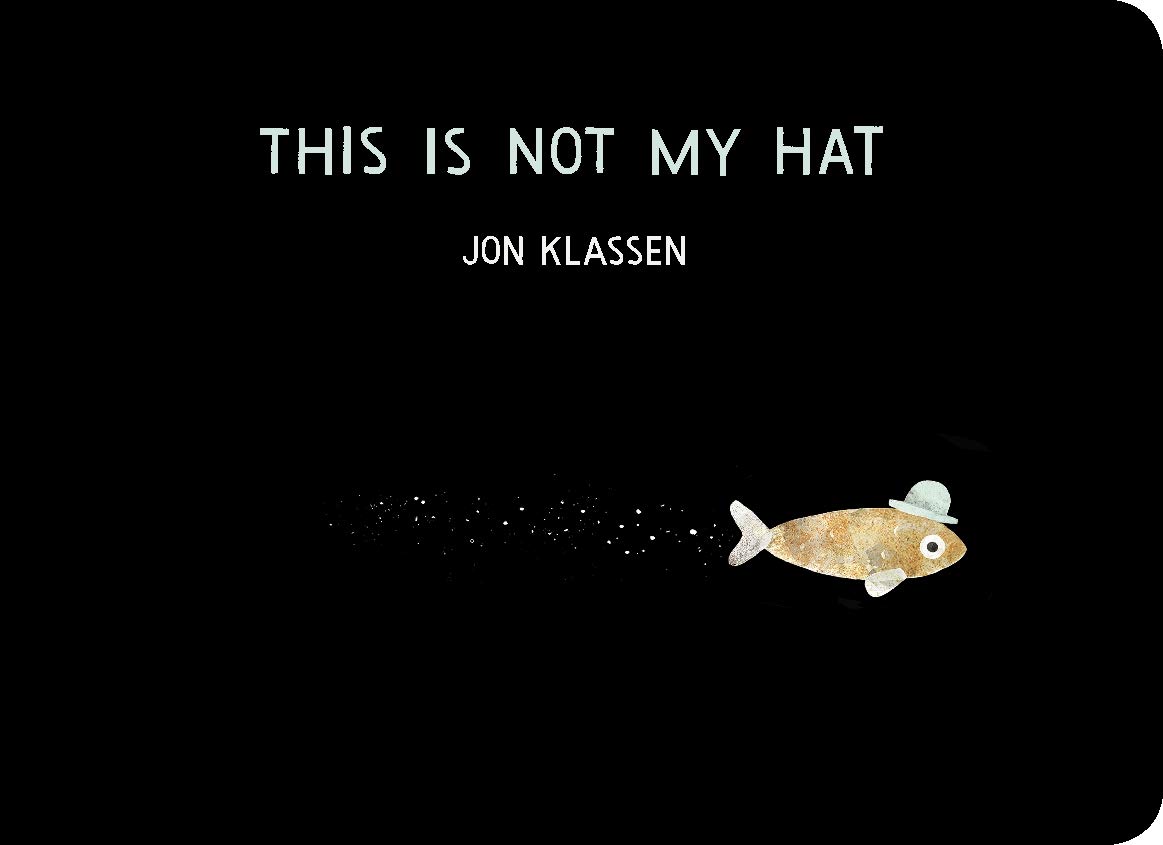
A very little fish in a light blue bowler hat cheerfully confesses to stealing the hat from a very big fish. The story cuts between two points of view: the little fish’s cocky monologue about the ease of the theft and the big fish’s silent hunt for the thief.
We Found a Hat
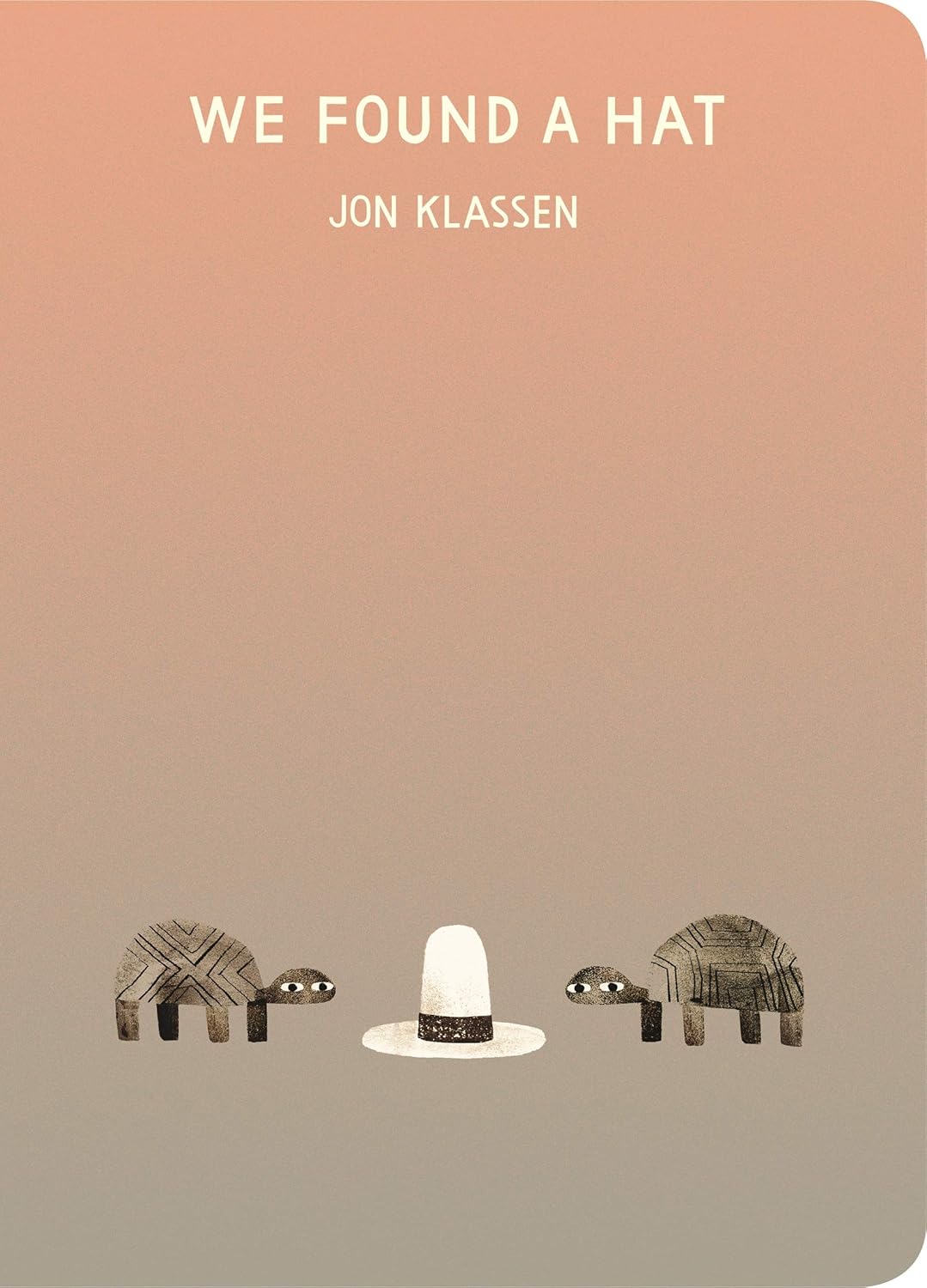
When two turtles find a cowboy hat they both want, their psychological manoeuvring to gain the coveted hat exposes feelings of vanity, pride, jealousy and betrayal. The last book in the Hat Trilogy.
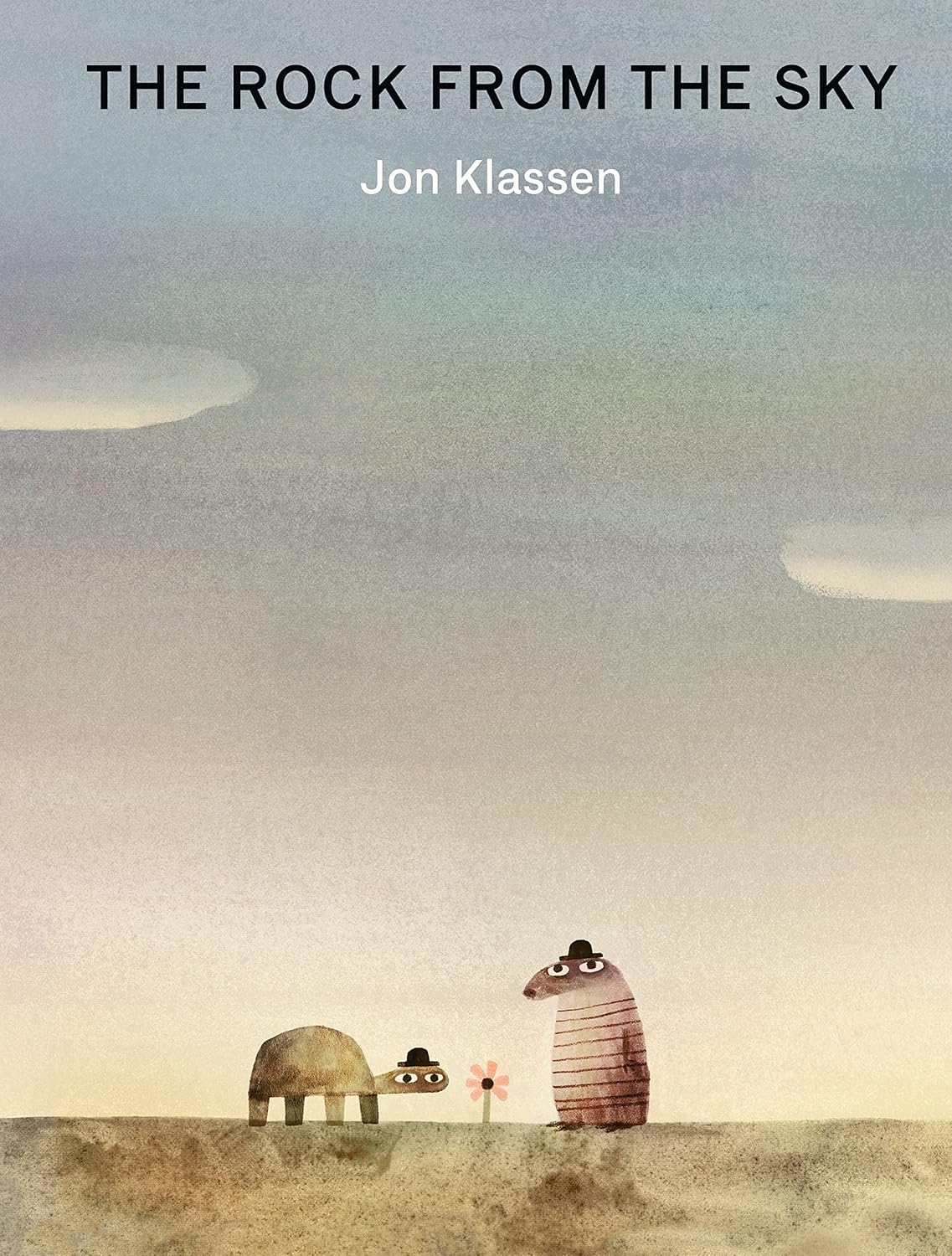
The Rock from the Sky
A philosophical drama in five acts, where the three main characters, the turtle, the snake, and the mole, ponder existential questions. What is the best spot to stand in? How do we imagine the future? Where is the best place to watch the sunset?
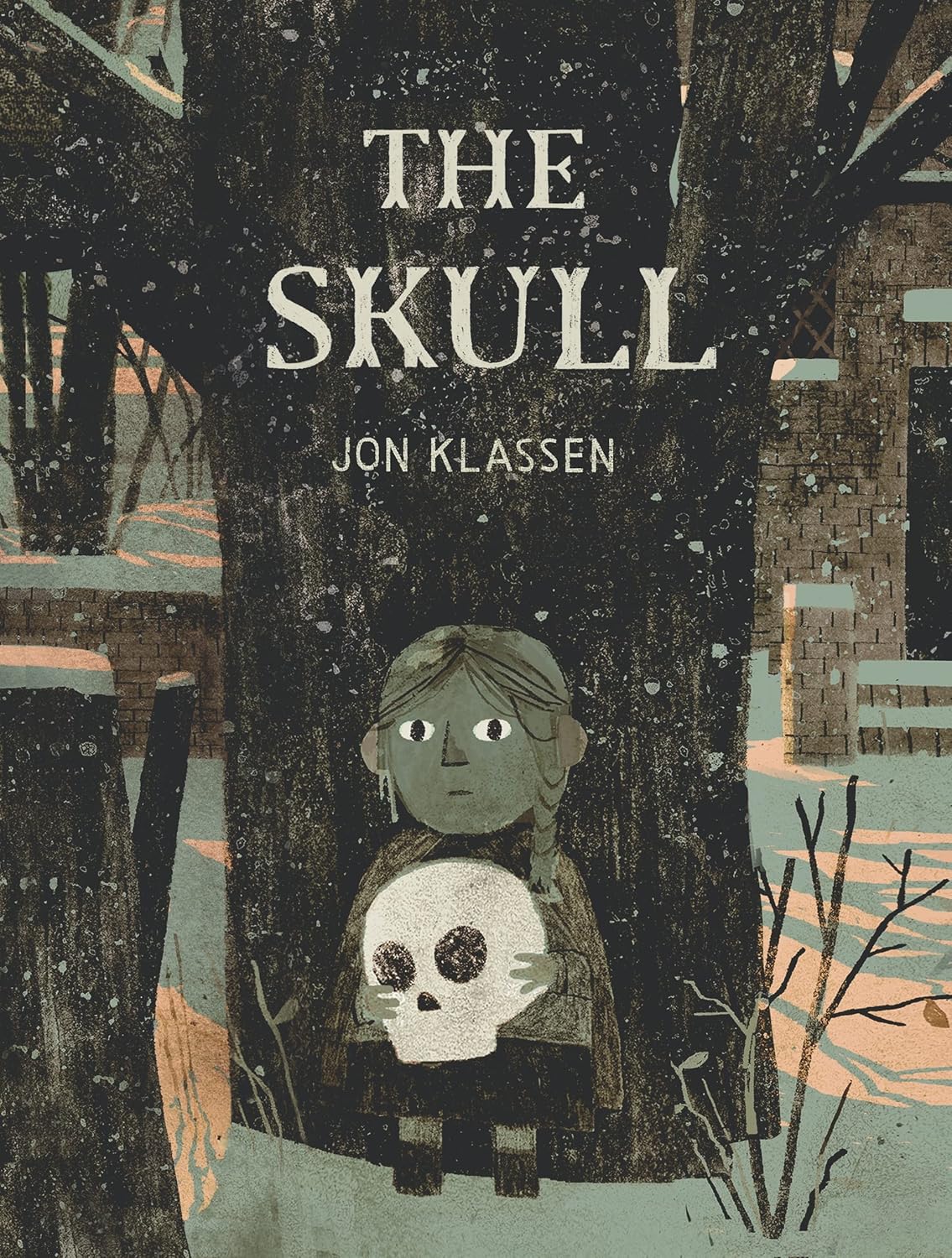
The Skull
We might describe the book as a ghost story—a house turns out to be haunted by a headless skeleton that wants its head back—but at heart, it is something else. The friendship that develops between the girl Otilla and the lonely skull evolves into a highly original story about loyalty and unconditional love with no easy answers.
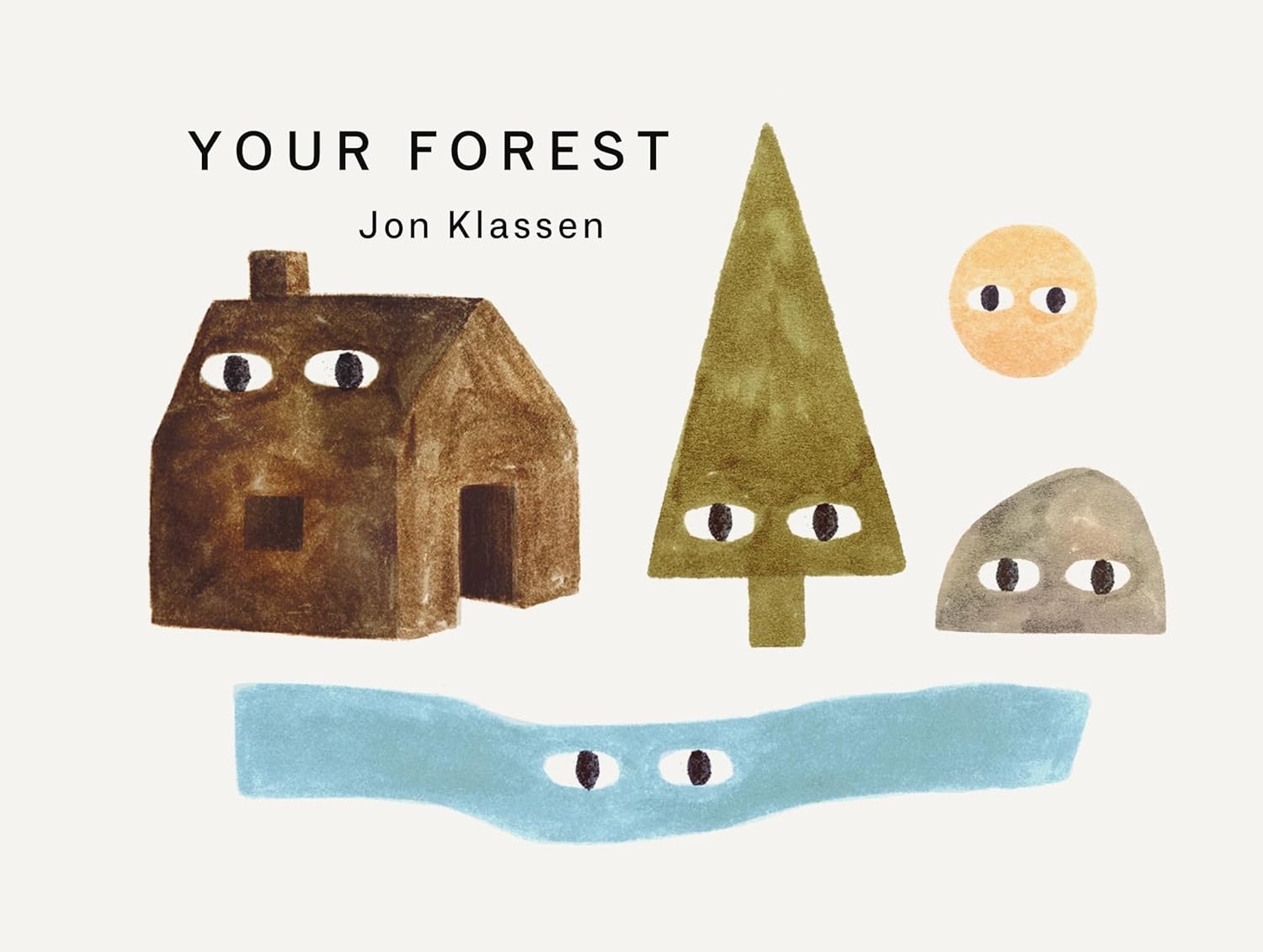
Your Forest
The first in a series of board books. While the books are created for very young readers, they also open the door to broader perspectives. It features no actors, just nature, landscapes, objects, places, and environments presented in short, factual sentences. Each book ends with an invitation to readers to make the place their own. It is an appeal of an almost spiritual nature.
Jon Klassen was born in 1981 in Winnipeg, Canada, and now lives in Los Angeles, USA. He began his career working in animated film before he started illustrating children's books. His breakout book, I Want My Hat Back, was published in 2011. It's a layered, ingeniously told tale of ownership and morality, right and wrong, that makes the reader work in more ways than one.
Jon Klassen’s body of work forms a subtle, astute, and humorous investigation into existential questions, where feelings of anticipation, suspense, and shock play a central role. His books open new perspectives on life’s challenges of uncertainty and hopefulness.
Interview with Jon Klassen
During the award week in Stockholm, we recorded an interview with Jon Klassen. Watch the video in the player below.
The phone call from the Jury
Listen to the phone call from jury chair Boel Westin to Jon Klassen.
New perspectives on life’s challenges
This text is written by Boel Westin and Per Gustavsson.
I think my work is defined by an aversion to movement, especially in the illustration. There's something about my sensibilities and what I like to draw that prohibits me from showing an action or showing something in the middle of happening.
– Jon Klassen
The Canadian illustrator and picture book artist Jon Klassen (b. 1981) began his career working in animated film, and the myriad possibilities of film for telling and showing a story are a major influence on his picture books. Instead of showing exactly what happens, Klassen shows what might happen or what might have happened. In text and illustrations alike, he takes advantage of empty space, deliberate omission, and the power of suggestion. He has often referenced the director Alfred Hitchcock and his idea of making the audience work. Hitchcock created suspense by simply setting the stage and letting the viewer imagine the rest. Klassen’s books exhibit a similar approach.
Klassen’s breakout book, I Want My Hat Back (2011), the first in his so-called Hat Trilogy, features a bear whose hat has gone missing. Although the small, pointy hat doesn’t fit the bear very well, the bear loves it and asks all the other animals if they have seen it. They all say no, even the rabbit, who is clearly the thief. The hat is on the rabbit’s head, where it fits much better than on the bear. The bear finally has a lightbulb moment and confronts the rabbit. The two face off wordlessly, seemingly frozen in their positions. They never speak, but their eyes speak for them. We read emotion and intent in their shifting gaze. But what happens next is not shown.

When we turn the page, the bear is wearing the hat. The rabbit is gone. A few broken blades of grass are strewn about, suggesting something dramatic has occurred. But we can only guess at what. There is no traditional narrator’s voice; instead, the story is told completely in dialogue, like a play. Most of the time, the characters look directly at us, the audience, amplifying the theatrical feeling. I Want My Hat is a layered, ingeniously told tale of ownership and morality, right and wrong, that makes the reader work in more ways than one. The rightful owner of the hat might seem obvious. But perhaps another question is who the hat fits best.
The second book in the trilogy, This Is Not My Hat (2012), develops similar themes, as a very little fish in a light blue bowler hat cheerfully confesses to stealing the hat from a very big fish. The story cuts between two points of view: the little fish’s cocky monologue about the ease and execution of the theft and the big fish’s silent hunt for the thief, which is narrated solely in pictures. The little fish has no idea the theft has been discovered. As onlookers, we have information the little fish does not. This simple and effective device— quintessential Hitchcock—creates a sense of suspense that builds from first page to last. The hunt’s end is hidden by a dense curtain of underwater plants. The little fish swims into them, disappearing from view. Next thing we know, the hat is back on its owner’s head, with the little fish nowhere to be seen.
While Klassen is a skilfully minimalist storyteller, his illustrations are charged with potential meaning and leave plenty of room for ambiguity. Probably the rabbit and the little fish were eaten by the owners of the hats, but we can’t be sure. Klassen leaves it to the reader to imagine—or not imagine—what happened. Even the things we don’t see are part of the story. The rich, muted colours reflect moods and reinforce the plot.
The last book in the trilogy, We Found a Hat (2016), also revolves around the desire for a hat, but under somewhat different circumstances. When two turtles find a cowboy hat they both want, their psychological manoeuvring to gain the coveted hat exposes feelings of vanity, pride, jealousy and betrayal. Yet there is also a deeply humanist note to this story, which culminates with the vision of a new solidarity in some other place, some other time, perhaps in a dream. We find no easy answers here. Instead, Klassen leaves us with the image of two turtles—each wearing a hat—moving away toward a dark night sky alight with stars.
Klassen’s next picture book, The Rock from the Sky (2021), is similarly defined by the use of simple shapes and a minimalist style. As before, Klassen uses a cast of animal characters—the turtle is a recurring character in his books—who exhibit contrasting life philosophies. We might describe the book as a philosophical drama in five acts, where the three main characters, the turtle, the snake, and the mole (none of the animals are identified in the text, but in interviews Klassen has called the third animal a mole) ponder existential questions. What is the best spot to stand in? How do we imagine the future? Where is the best place to watch the sunset? The big rock falls from the sky quite literally into the middle of their discussion, but that doesn’t seem to change anything. “What happened?” asks one of the animals. “Nothing,” comes the reply. Later, two of the animals are watching the sunset. “What are you doing?” asks the third. By the time he gets close enough to hear what they are saying, the answer is “We are not doing it anymore.”
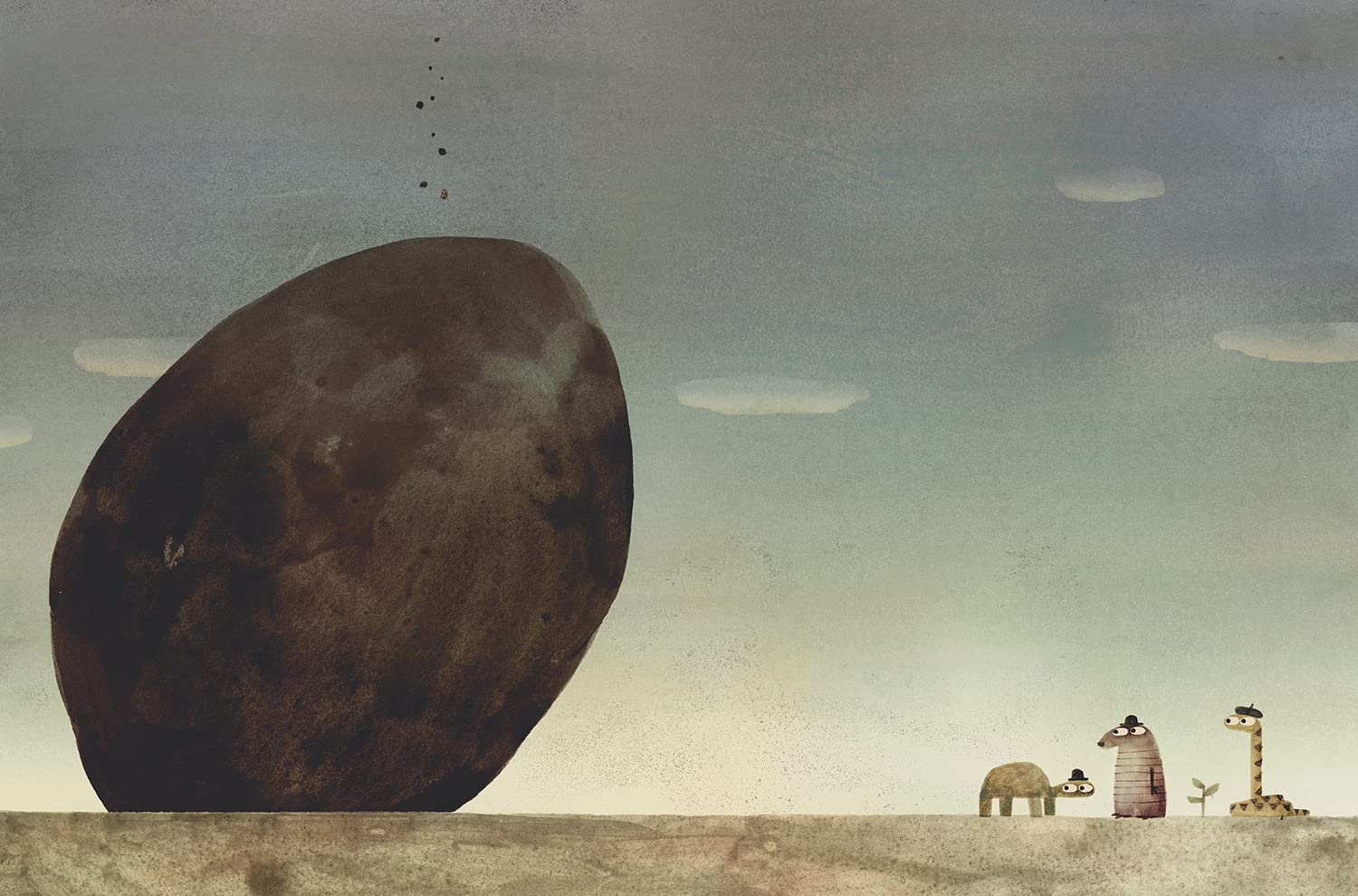
The characters spend most of their time exposed to external circumstances that can be interpreted from more than one perspective. The mole and the turtle imagine the future with their eyes closed, unaware of the approach of a threatening space monster. The terse, funny, absurdist dialogue is reminiscent of a Samuel Beckett play, and Klassen has talked about Beckett’s importance for the book. The grey-tinged palette reinforces a feeling of uncertainty, an indefinite sense of waiting. The five-act structure may also evoke the feeling of being at the theatre, with each act playing out in a new set. In the midst of infinite space, the characters move through a desert-like landscape where low horizons cut off the ground from a darkening sky.
In the illustrated chapter book The Skull (2023), Klassen changes format and narrative style, although we still see both words and pictures on each spread. A clear narrative voice now advances the story in the classic way, and the dialogue between the characters has also become more expansive. While The Skull is based on a Tyrolean folk tale, Klassen’s story is wholly his own. A folk tale, by definition, can always be retold and transformed, a process to which Klassen testifies in an author’s note. After reading the original tale, a year went by during which his brain changed the story without “telling” him. “I liked my brain’s new version,” he says.
Klassen begins his story in medias res, with a girl running through a dark forest. “Otilla ran and ran,” he writes. “She ran through trees and up hills. She ran for a long time. All through the night.” Why Otilla is running, or where she is running from, the story does not say. When Otilla arrives at a big old house whose occupant is a skull, she moves in. The sole condition is that she carry the skull around, as rolling about is difficult for him. The atmosphere is a combination of cozy tea-drinking by the fire, picking pears in the garden room, things stirring in arched passageways, and corners full of dark, frightening shadows. We learn that the skull is in a picture on the wall, but we are not allowed to see the picture. The castle’s many rooms become an element of the drama, and as readers, we sometimes do not know where we are, an uncertainty reminiscent of the world of horror films.
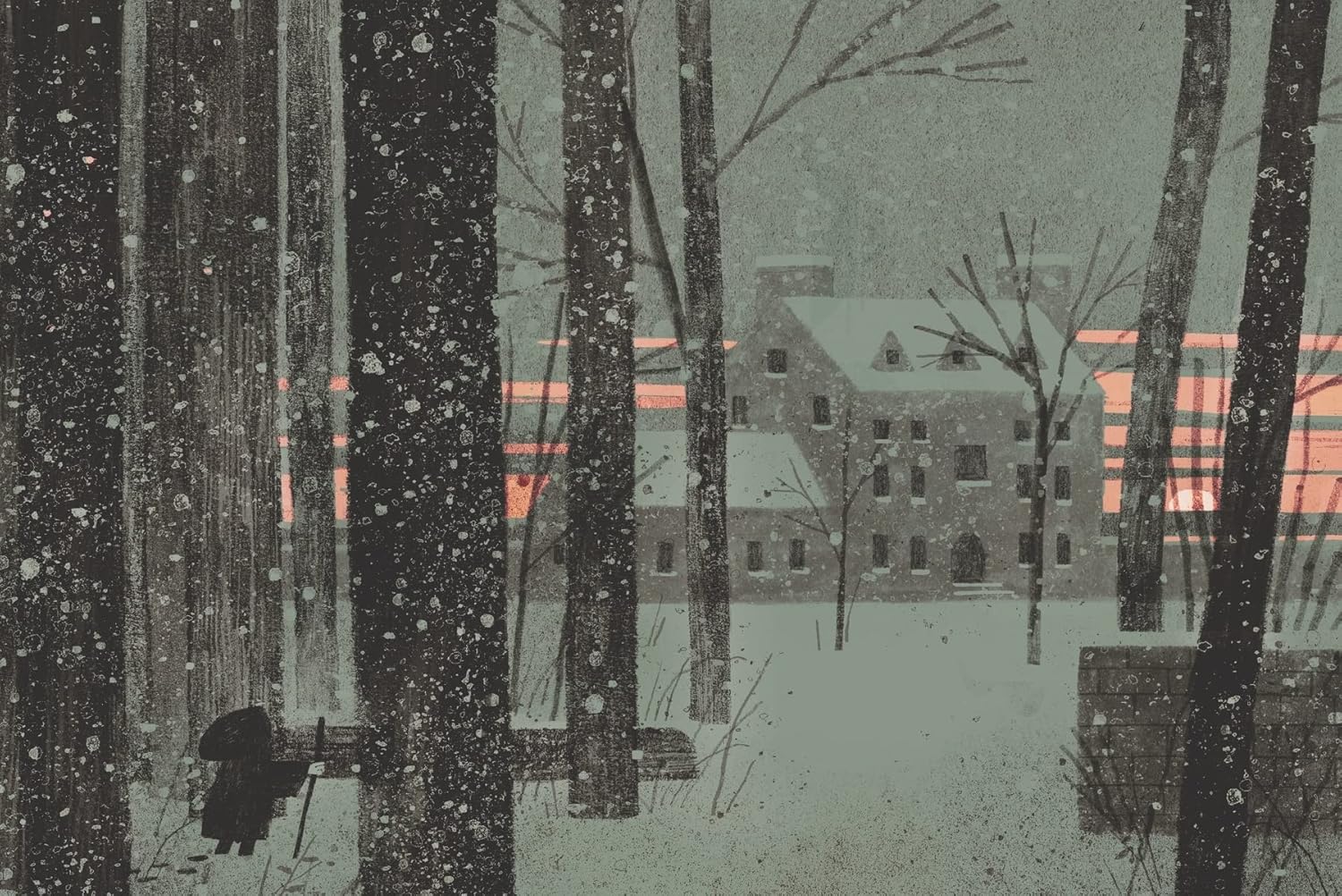
We might describe The Skull as a ghost story—the house turns out to be haunted by a headless skeleton that wants its head back—but at heart, it is something else. The friendship that develops between Otilla and the lonely skull evolves into a highly original story about loyalty and unconditional love with no easy answers. Undaunted by either bones or ashes, Otilla dispatches the rattling skeleton in the dark shadows of the night. It might all seem dark and brutal, but the next morning there is breakfast with tea and pears in the gentle morning light. Klassen activates some large areas of his pictures using a splatter technique, and at times it feels as if the pictures, like the skeleton, are in a state of decay or decomposition. The blue-grey palette, set off by black and some light browns and pinks, reinforces the mood. So, too, does the alternation of close up and far away perspectives. All the while, Otilla’s expressive eyes find a counterweight in the empty eye sockets of the skull.
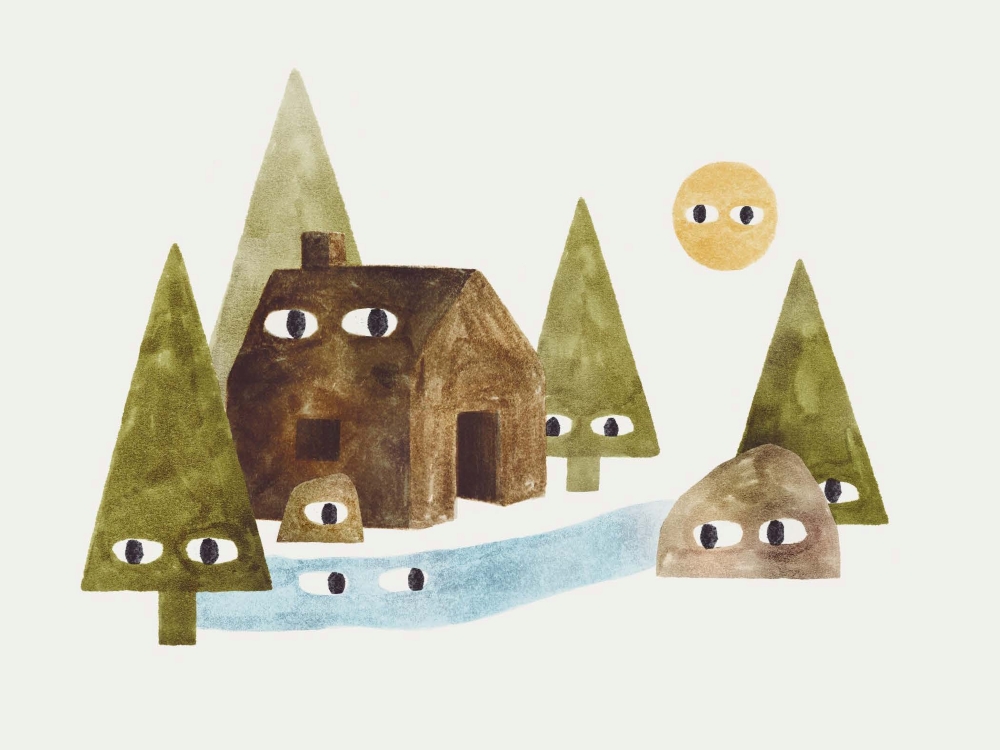
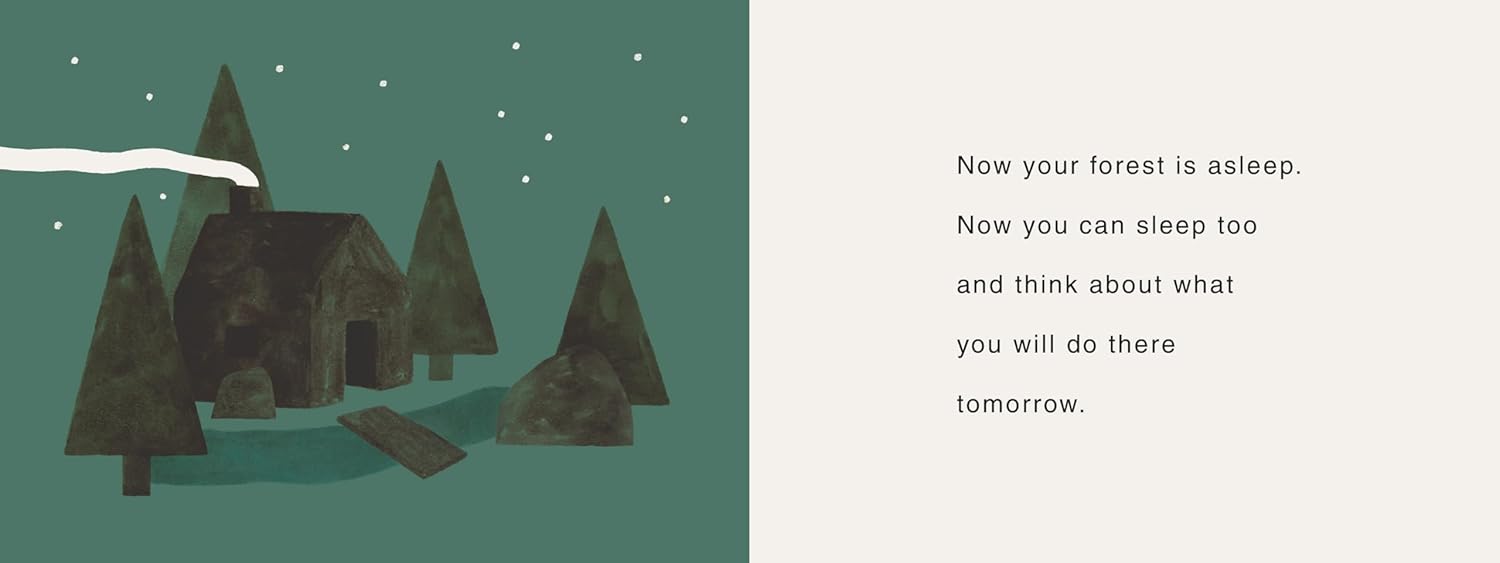
One of Klassen’s ongoing projects is a board book series. While the books are created for very young readers, they also open the door to broader perspectives. The trio Your Forest, Your Farm and Your Island (2025) feature no actors, just nature, landscapes, objects, places, and environments presented in short, factual sentences. Here, Klassen works with unoutlined shapes, and each turn of the page adds something new. The sun, the trees and all the other parts of the forest look at us with big eyes and follow us curiously, sometimes anxiously, through the story. Each book ends with an invitation to readers to make the place their own: “Now you can sleep and think about what you will do there tomorrow.” It is an appeal of an almost spiritual nature. Here, the reader is truly made into a co-creator.
As an illustrator, Klassen has developed a rich and shifting repertoire in his many projects with other authors. He is the illustrator of Sara Pennypacker’s poignant suite of books about the friendship between a boy named Peter and a fox named Pax and has published a number of noted children’s books with Mac Barnett, including a highly original trilogy about geometric shapes that begins with Triangle (2017). Barnett and Klassen have also collaborated on The Three Billy Goats Gruff (2022), a retelling from the point of view of the troll, and How Does Santa Go Down the Chimney? (2023), a picture book that reveals how Santa really does it.
Jon Klassen’s body of work forms a subtle, astute, and humorous investigation into existential questions, where feelings of anticipation, suspense, and shock play a central role. His books open new perspectives on life’s challenges of uncertainty and hopefulness.
-----
IIlustrations from:
I WANT MY HAT BACK. Copyright © 2011 by Jon Klassen.
THE ROCK FROM THE SKY. Copyright © 2021 by Jon Klassen.
THE SKULL. Copyright © 2023 Jon Klassen.
YOUR FOREST. Copyright © 2025 by Jon Klassen.
Reproduced by permission of the publisher, Candlewick Press, Somerville, MA.
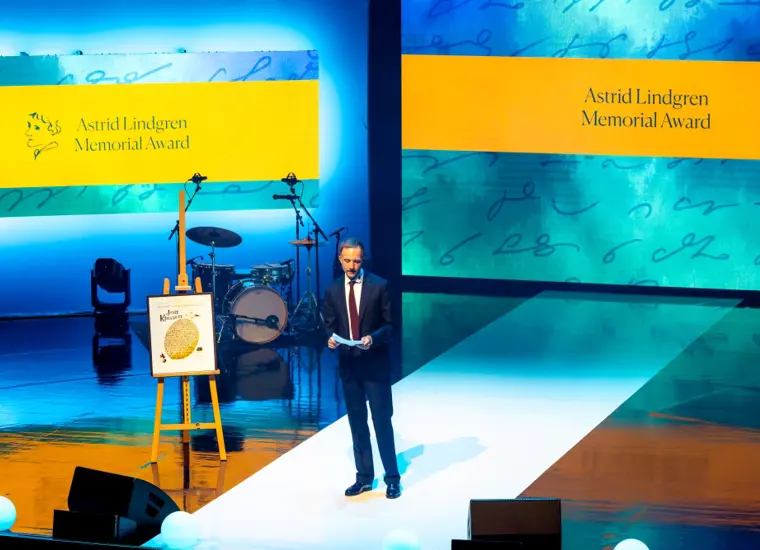
Acceptance Speech
"I will spend as much time as possible going forward trying to express what this award means to me. It is truly life-changing."
The full acceptance speech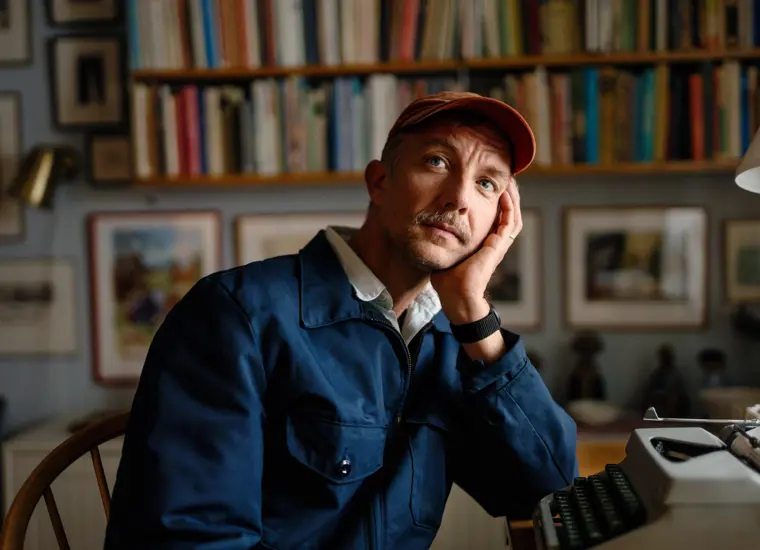
"I'm just not comfortable without a hat"
What does Jon Klassen’s creative process look like? What does his selection for the Astrid Lindgren Memorial Award mean to him, and where does his obsession with hats come from? We called the 2026 laureate to find out!
Read our interview with Jon KlassenMost of the time it’s hard to know if you reach people, but if they laugh and your intention was to make them laugh, then you did it. It’s the best proof that you were able to communicate.

Discover our laureates
The Astrid Lindgren Memorial Award is awarded to authors, illustrators and narrators, but also to people or organizations that work to promote reading.
Find out more about the laureates
Children have the right to great stories
To lose yourself in a story is to find yourself in the grip of an irresistible power. A power that provokes thought, unlocks language and allows the imagination to roam free. The Astrid Lindgren Memorial Award was created in 2002 by the Swedish government to promote every child’s right to great stories.
Find out more about the award
Astrid Lindgren
“Curious” is a word that Astrid Lindgren often used in her work. Curious is a word that also aptly describes Astrid herself and her life’s achievement. For it is curious, surely, that a farmer’s daughter from Sweden, from the spare and stony countryside of Småland, should grow up to become an author beloved around the globe, translated into nearly 100 languages, and lauded by readers of all ages.
Learn more about Astrid Lindgren